Understanding the Ruins: What You'll See on Inis Cealtra
A guide to the medieval structures and archaeological treasures on Ireland's Holy Island
Stepping into Medieval Ireland
Inis Cealtra isn't just another archaeological site. It's a window into how monastic communities actually lived between the 7th and 12th centuries. When you walk across this small island in Lough Derg, you're literally treading on the same paths monks used 1,300 years ago.
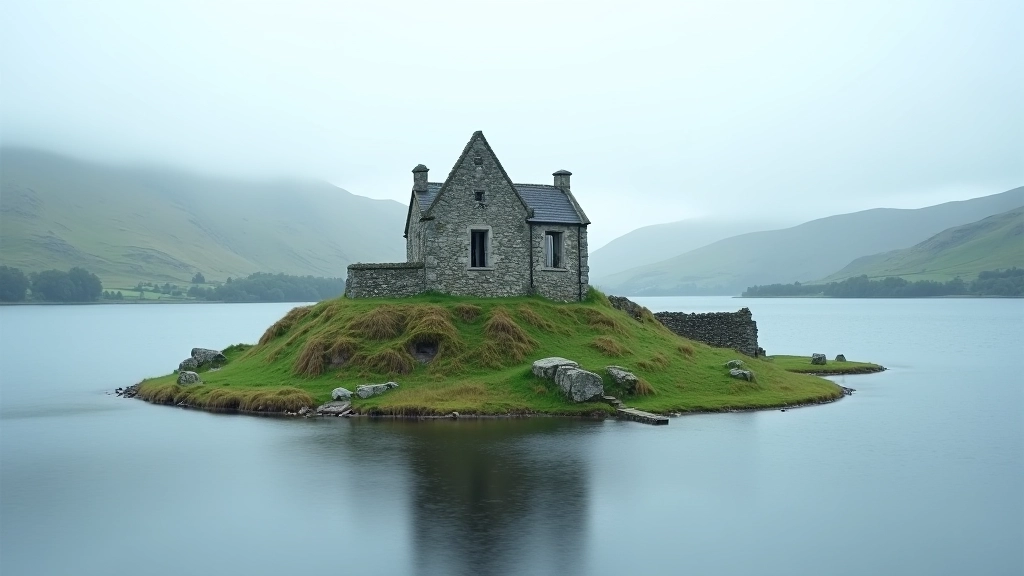
The island holds seven major structures, and each one tells a different story. Some buildings have nearly vanished, leaving just foundation stones. Others—like the Round Tower—still stand nearly complete, their weathered stone still holding together despite centuries of Atlantic wind and rain. You'll find everything from burial grounds to early Christian crosses, from residential quarters to a bell tower that's watched over the island for over a thousand years.
Quick Facts
- Founded around 600 AD by Saint Caimin
- Peak population: roughly 50-100 monks
- Abandoned by the 13th century
- Island is about 5 acres
- 7 major structures still identifiable
The Round Tower: Ireland's Most Distinctive Structure
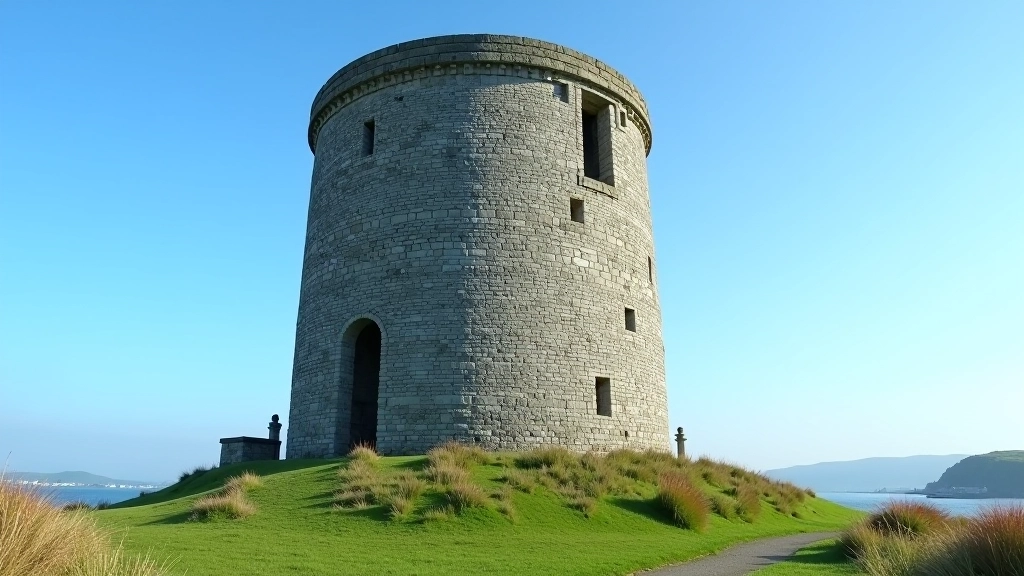
You'll spot this first. The Round Tower is impossible to miss—it's the tallest structure on the island at about 80 feet, and it's still largely intact. These towers weren't watchtowers like many people assume. They served practical purposes: bell towers for calling monks to prayer, secure storage for manuscripts and treasures, and refuges during Viking raids.
What's remarkable is how they're built. There's no mortar—just precisely cut stones fitted together so tightly that you can't slide a knife blade between them. The doorway sits about 12 feet up the wall, accessible only by ladder, which you'll understand when you realize Viking raids happened regularly. Inside, narrow stone steps spiral up to four different levels. The walls are roughly 3 feet thick at the base, tapering as you go higher.
If you get the chance to climb it (and the access is sometimes restricted for safety), the view across Lough Derg is stunning. But honestly, the tower's impact is just as powerful from the ground—it's a tangible reminder of how monks engineered solutions to real problems 1,200 years ago.
The Churches: Where Daily Life Centered
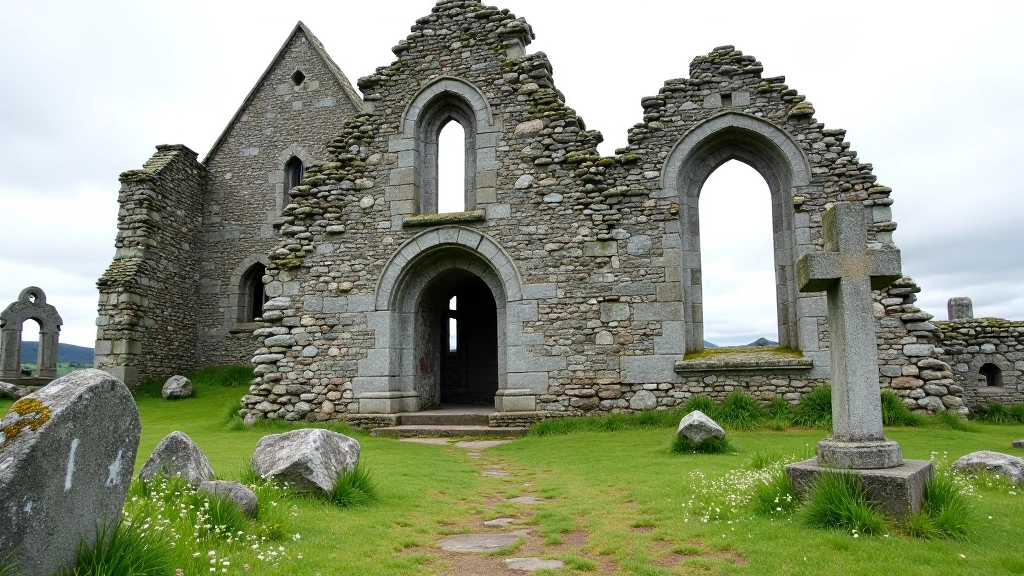
Inis Cealtra had multiple churches—not just one. There's the Church of Saint Caimin, which is the main structure you'll encounter. What remains today is basically the stone skeleton: walls without a roof, empty window openings facing toward the water, and a simple stone altar area. It's smaller than you'd expect—roughly 40 feet long and 20 feet wide—which makes sense when you consider the monastic community wasn't enormous.
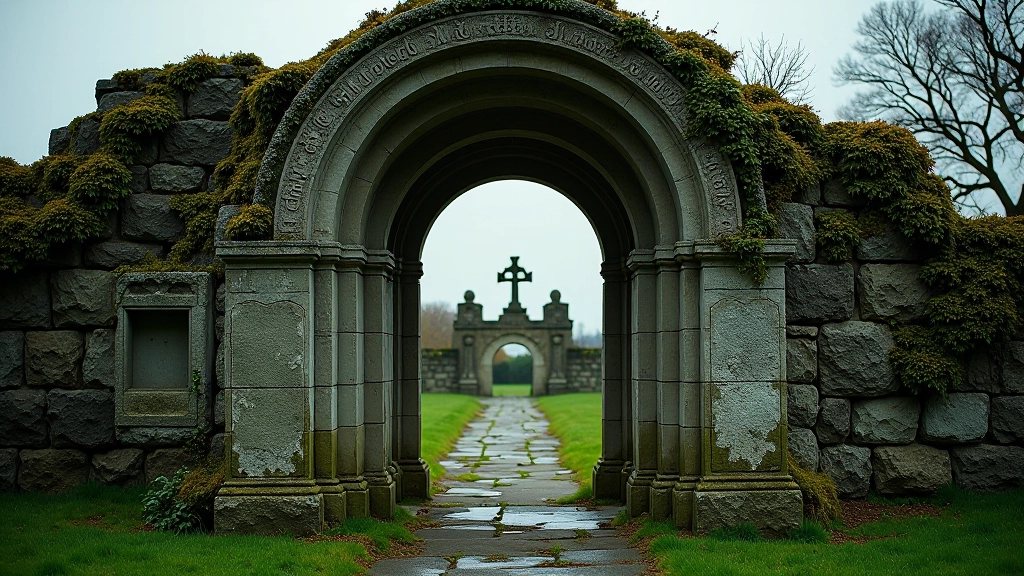
The construction is distinctly Early Christian. No arches or fancy stonework. Just solid walls built for durability, not decoration. You'll notice the windows are narrow—partly for defense, partly because glass was impossibly expensive. Most light came from the open door. The monks sat on stone benches carved into the walls, and they probably had a wooden roof at some point, though it's long gone now.
If you look closely at the stonework, you'll see how irregular the blocks are. There's no modern precision here. Each stone was shaped to fit its neighbors, and the whole thing has survived over a thousand years of weather. That's not luck—that's skilled craftsmanship.
What to Notice About the Cemetery
The graveyard covers a significant portion of the island. You'll see grave markers ranging from simple stone slabs to more elaborate Celtic crosses. Some stones have carved crosses on them—that's how you know they're Christian burials. Others are just weathered rocks, worn smooth by centuries of wind and rain.
The Cemetery: Generations of Monks
The graveyard is one of the most moving parts of the island. It's sprawling and somewhat chaotic—not the orderly rows you'd see in a modern cemetery. Monks, lay workers, pilgrims, and local people were buried here over centuries. The oldest graves are probably unmarked or marked with stones so worn that any carving is invisible.
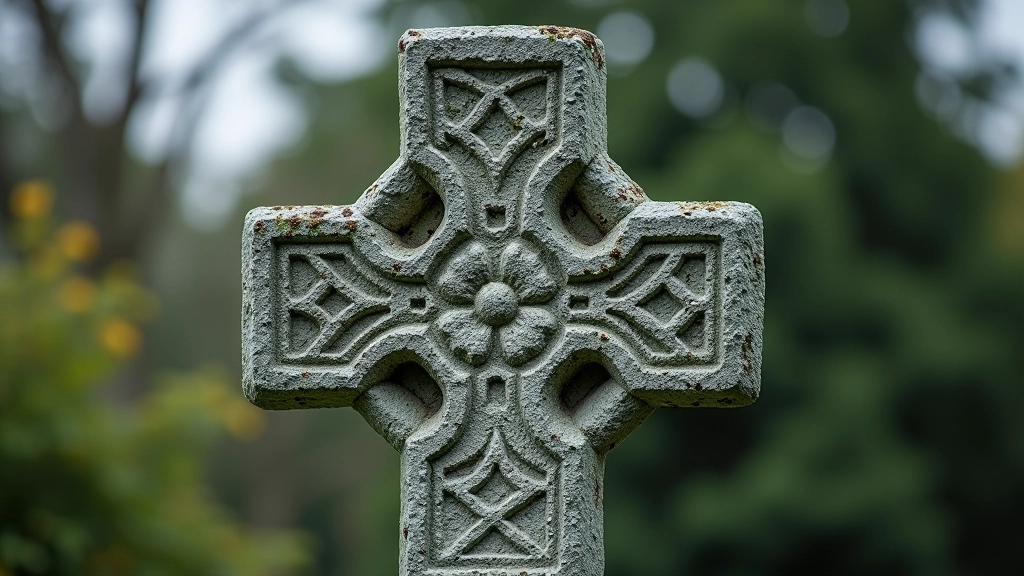
You'll notice the Celtic crosses scattered throughout. These aren't random—they marked important graves, probably abbots or particularly respected monks. The crosses themselves are fascinating. Unlike the ornate high crosses you see at other Irish sites, these are simpler, more worn. The cross design is just carved into flat stone, with geometric patterns around it. Some have interlocking designs that were probably quite beautiful when freshly carved.
Walking through the graveyard, it's hard not to think about continuity. Monks died here, were buried here, and their successors probably visited their graves. This wasn't a temporary settlement—it was a community with roots, with history, with connection to place.
The Smaller Structures: Reading the Details
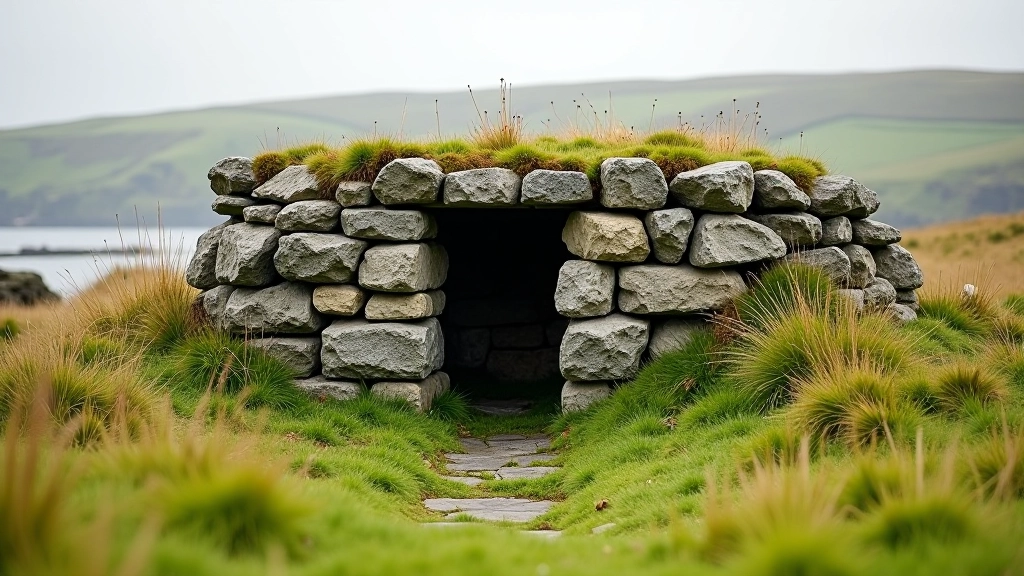
Beyond the major buildings, you'll find several smaller structures that are equally interesting once you know what you're looking at. There are the remains of what were likely residential cells—simple stone buildings where monks lived individually or in pairs. These are much smaller than the church, usually just 12-15 feet across, with a single small window and a doorway.
You'll also see what archaeologists call "penitential stations"—small enclosures where monks did penance or spent time in solitary prayer. Some are barely visible, just a few stones defining a tiny space. Others are more substantial, with walls still standing several feet high. The purpose of these stations tells you something important about monastic life: it wasn't all communal. There was a strong emphasis on individual prayer, solitude, and personal spiritual discipline.
There's also evidence of workshops and storage areas, though these are harder to interpret without expert guidance. Monks needed to eat, so they had fields somewhere on the island (probably now eroded or overgrown). They needed to copy manuscripts, so they had a scriptorium. They needed tools, so they had craft workers. All of this activity happened on just five acres.
The Celtic Crosses: Art and Function
Celtic crosses appear throughout the island, and they're worth examining carefully. Unlike some of the more elaborate high crosses at other sites, these are carved directly into flat stones. The designs vary—some have simple geometric patterns in a grid, others have more flowing interlocking designs. Each one is different, suggesting individual craftspeople created them over different time periods.
The crosses weren't purely decorative. They served specific purposes: marking graves, indicating holy sites, creating boundaries within the monastic space. Their presence everywhere on the island reinforced the Christian nature of the community and the importance of the cross symbol to everyday life.
What's striking is how the lichen and moss have colonized these crosses over centuries. The weathering has softened the sharp edges, making them feel ancient in a way that's hard to describe. When you run your hand over a carved cross and feel the pattern worn smooth by wind and rain, you're connecting with monks who carved it over a thousand years ago.
Visiting the Island: What to Expect
Getting to Inis Cealtra requires a boat from Mountshannon pier (about 15-minute journey). The island itself is mostly open ground with grass, rocks, and ruins scattered across it. There aren't marked pathways in the modern sense—you just wander and explore. That actually works in your favor because it forces you to slow down and really observe things.
Bring good shoes—the ground is uneven and sometimes marshy. The weather can change quickly, so a light rain jacket is sensible even if it's sunny when you arrive. There's no shelter on the island, no café, no facilities. It's genuinely wild in the best way. That's what makes it special. You're not walking through a tourist-managed site with ropes and information boards (though some structures do have protective barriers for safety). You're exploring actual ruins where monks lived their lives.
Give yourself at least two hours on the island if you want to see everything and absorb the atmosphere. If you're interested in the archaeology and want to understand what you're looking at, consider hiring a guide—local historians know stories that bring the stones to life. Either way, you'll leave with a deeper understanding of how medieval Irish monastic communities actually functioned.
Important Note
This article provides historical and archaeological information about Inis Cealtra for educational purposes. Some structures on the island have protective barriers for safety reasons. Always respect these barriers and follow any guidance from boat operators or site stewards. Archaeological interpretations change as new research emerges, so what we understand about the site today may be refined in the future. For the most current information and access details, contact local heritage organizations or visitor services in County Clare.

Related Articles